
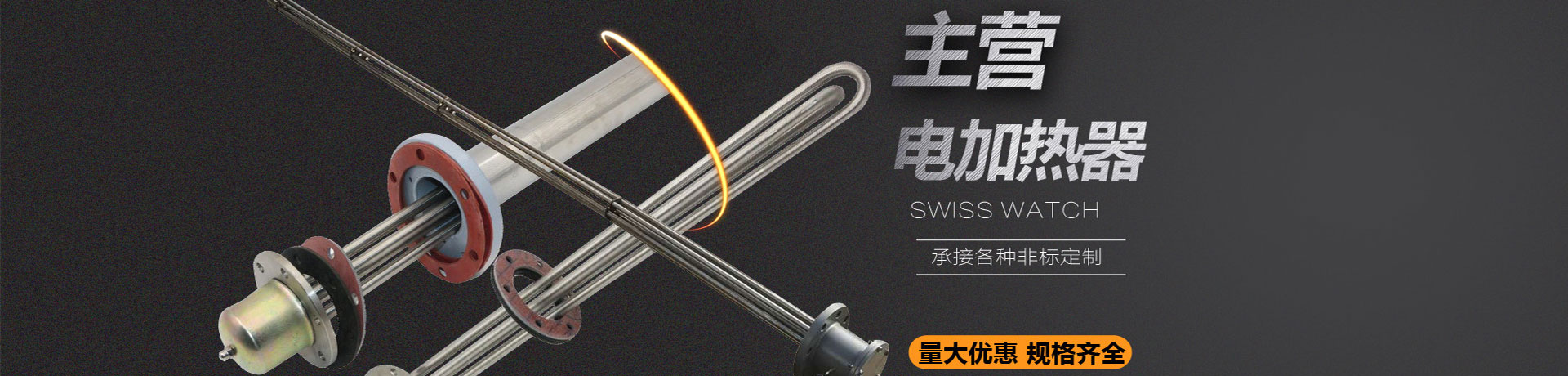
During on-site maintenance, it is common to find discolored insulation sleeves at the wiring terminals of bolted electric heating rods and local darkening of the heating section. Upon disassembly and inspection, the resistance wire is found to have obviously oxidized and become thinner. Such phenomena are mostly related to the high surface load selected during the selection stage and the mismatched power supply capacity later. For procurement personnel, maintenance issues need to be included in verification before ordering.
Surface load is a leading indicator of service life
Surface load (watt density) refers to the power borne per unit heating area and is a key parameter in the selection of DRB-360 bolted electric heating rods. When the value is too high, the operating temperature of the resistance wire rises, oxidation accelerates, and aging of insulation materials intensifies simultaneously; on-site manifestations include shortened service life of the heating rod and overheating of terminals. During procurement, suppliers should be required to specify the surface load value, and calculations should be made in combination with bolt specifications and the installation space of the heating rod. It is not advisable to judge solely by power rating.
Power increase must be accompanied by verification of power supply and control capacity
Taking M56×4 bolts with 550W heating rods and M76×4 with 900W to 2350W as examples, increasing power can shorten the time to reach the set temperature, but the power supply capacity and the output capacity of the control cabinet must be confirmed at the same time. Procurement personnel should verify the rated current of the on-site circuit, the conductor cross-section, and the capacity of the relays or contactors in the control cabinet, so as to avoid terminal heating or malfunction of control components caused by excessive current after capacity expansion.
Inspection items during arrival and inventory stages
During acceptance, check whether the insulation layer of the lead wires of the heating rod has indentations and whether the heating section has bending marks, and verify that the model and specifications are consistent with the ordered parameters. Inventory should be stored in a dry environment to prevent terminals from dampness. Before commissioning, measure the cold resistance and compare it with the nominal value; if the deviation is obvious, it should not be installed directly.